Intentional invitations
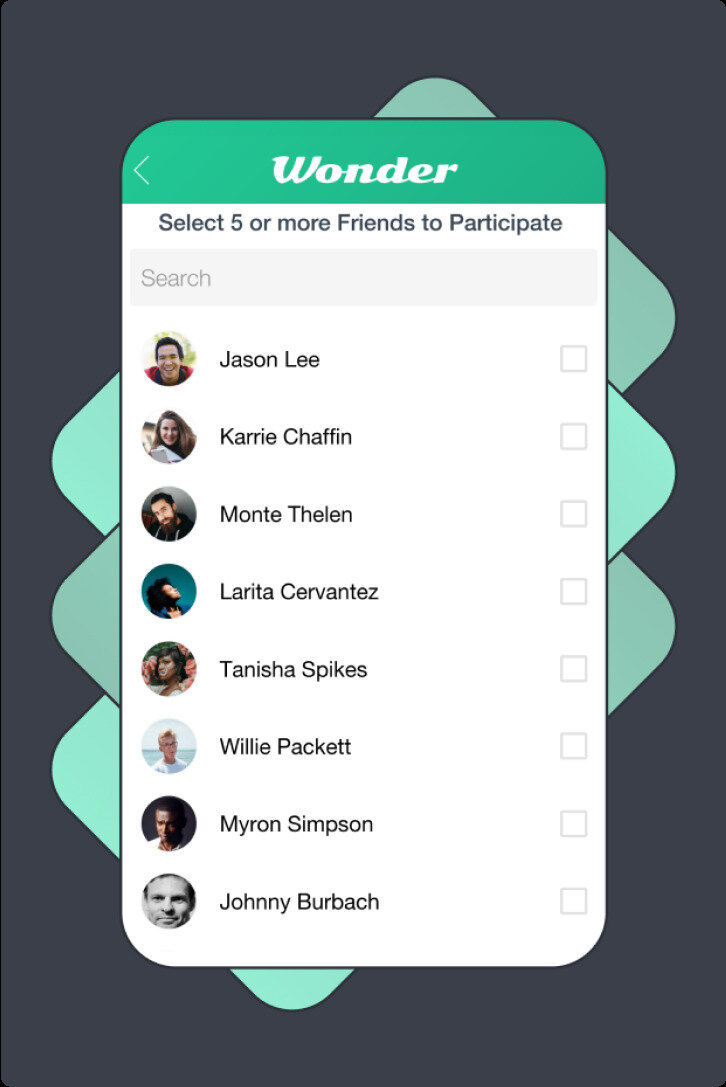
People begin by choosing a trusted group instead of broadcasting an undefined request for feedback.
Case study · private feedback experience
A peer-feedback app designed to make a difficult personal act—asking trusted people what they think—feel structured, private, and worth reflecting on.
The product problem
People often want an outside perspective, yet the act of requesting it can feel exposing. A product for peer feedback has to account for more than questions and scores: it has to help someone choose the right people, understand the request, and feel in control of what happens next.
Wonder was designed as a gentle sequence: invite a trusted circle, ask focused prompts, and return feedback in a private space made for reflection rather than performance.
The approach
Make the invitation step intentional, so feedback is grounded in relationships a person has actively chosen.
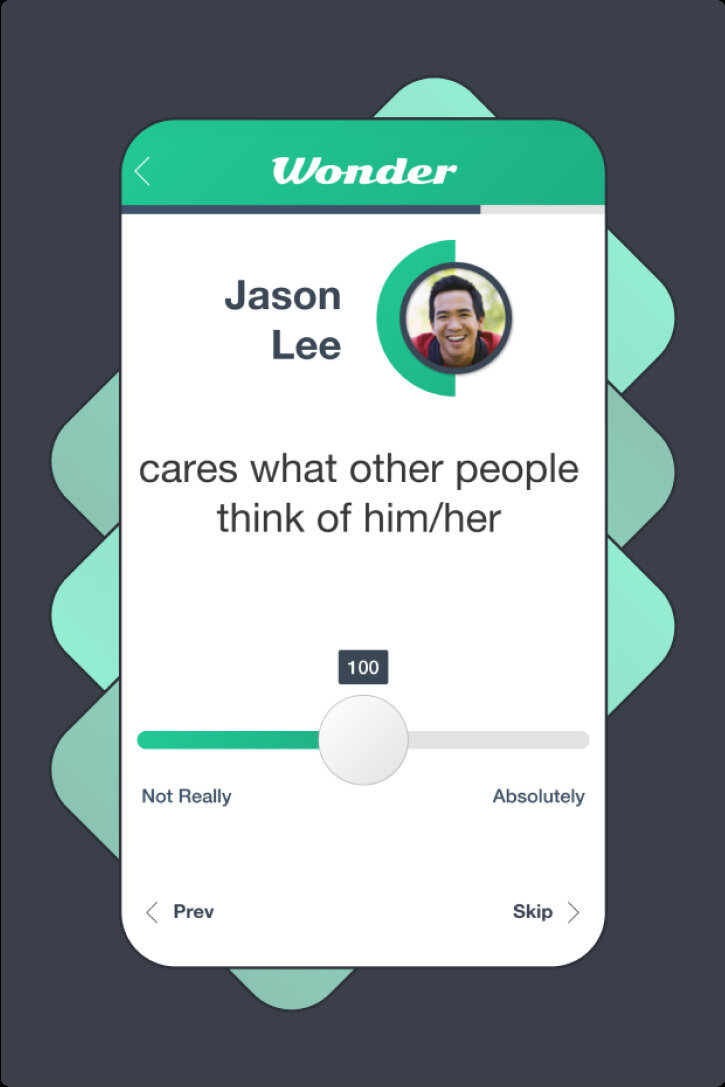
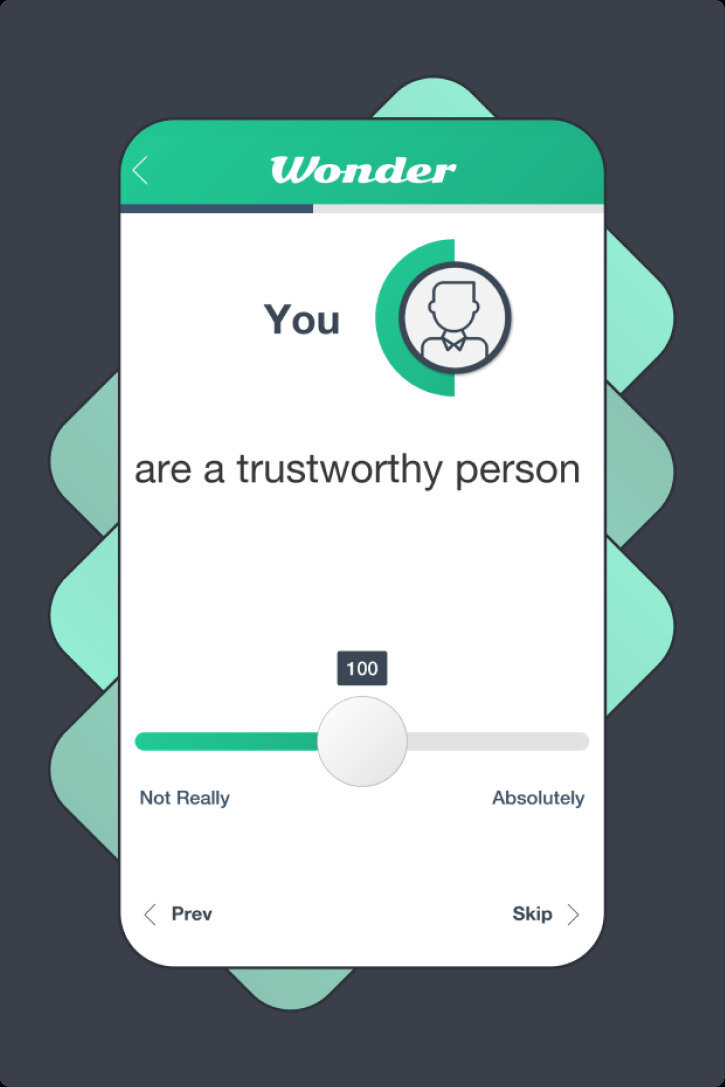
Use clear, bounded prompts that help peers give useful perspective without turning feedback into a vague social task.
Present feedback privately and with enough context that a person can understand it at their own pace.
In the product
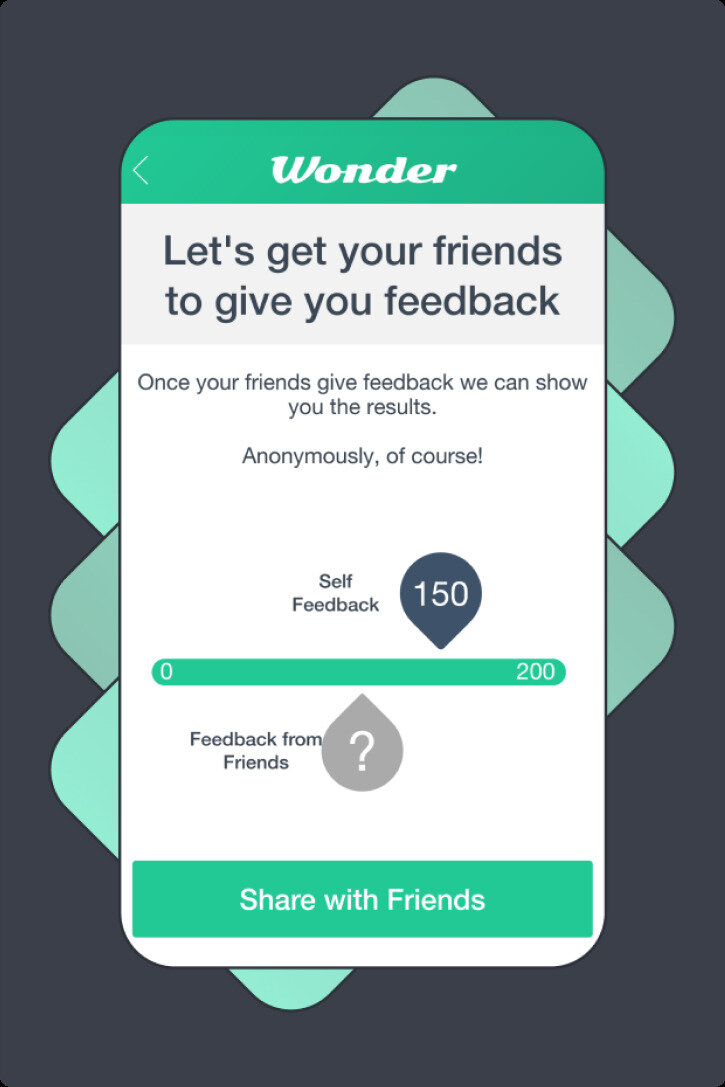
The experience shows the relationship between self-perception and peer perspective while keeping the next step—share, wait, and reflect—clear to the person asking.
Designed capability
People begin by choosing a trusted group instead of broadcasting an undefined request for feedback.
Simple explanations show contributors what they are being asked to do and the person receiving feedback what follows.
The experience treats feedback as personal context to consider, not a public score to optimize.
Key learning
When a product asks people to be vulnerable, it must make consent, context, and control obvious at every point. Those details are not legal polish around the product—they are the reason someone can trust the experience at all.
Back to all projectsTransforming Organizational Culture with AI
Organizations struggled with understanding employee satisfaction, predicting turnover, and building positive workplace cultures. Traditional HR tools provided limited insights into team dynamics and individual satisfaction. Companies lacked data-driven approaches to improve retention, boost productivity, and create thriving work environments that attract top talent.
We developed an AI-powered HR analytics platform that continuously measures employee sentiment, analyzes team dynamics, and provides predictive insights for organizational improvement. The platform includes pulse surveys, sentiment analysis, turnover prediction, and personalized action plans—all powered by machine learning to deliver actionable workforce intelligence.
The platform transformed how organizations understand and improve their workplace culture, resulting in 85% average improvement in employee engagement, serving 500+ companies globally, and analyzing insights for over 2 million employees. Companies using Wonder App saw significant improvements in retention, productivity, and overall workplace satisfaction.
From Research to AI-Powered Insights
Understanding Workplace Dynamics
We conducted comprehensive research with organizational psychologists, HR leaders, and employees across various industries to understand the factors that drive engagement, satisfaction, and performance. This research formed the foundation for our AI models and measurement frameworks.
Building Intelligent Workforce Analytics
Working with data scientists and ML engineers, we developed sophisticated algorithms for sentiment analysis, engagement prediction, and turnover risk assessment. These models were trained on diverse datasets and validated against real workplace outcomes.
Enterprise-Grade People Analytics Infrastructure
We designed a secure, scalable platform architecture capable of processing sensitive employee data while maintaining the highest privacy standards. The system included real-time processing, advanced security controls, and comprehensive audit capabilities.
Measurable Impact on Employee Engagement
Lessons from Building AI-Powered People Analytics
Working with employee data requires the highest ethical standards and privacy protections. Building transparent AI models and giving employees control over their data was essential for gaining trust and ensuring responsible use of people analytics technology.
HR leaders needed specific, actionable recommendations rather than complex dashboards full of data. Focusing on clear insights that led to concrete improvement actions was more valuable than sophisticated analytics that were difficult to act upon.
Successful implementation required buy-in from executives, HR leaders, and employees. Creating value propositions for each stakeholder group and addressing their specific concerns was crucial for platform adoption and culture change.
Organizations that saw the best results used Wonder App as part of ongoing improvement processes rather than one-time assessments. Building habits around regular measurement and action planning was key to achieving lasting workplace transformation.