Clearer starting points
Prompts, supporting material, and task constraints live together, making each session easier to direct.
Case study · AI product systems
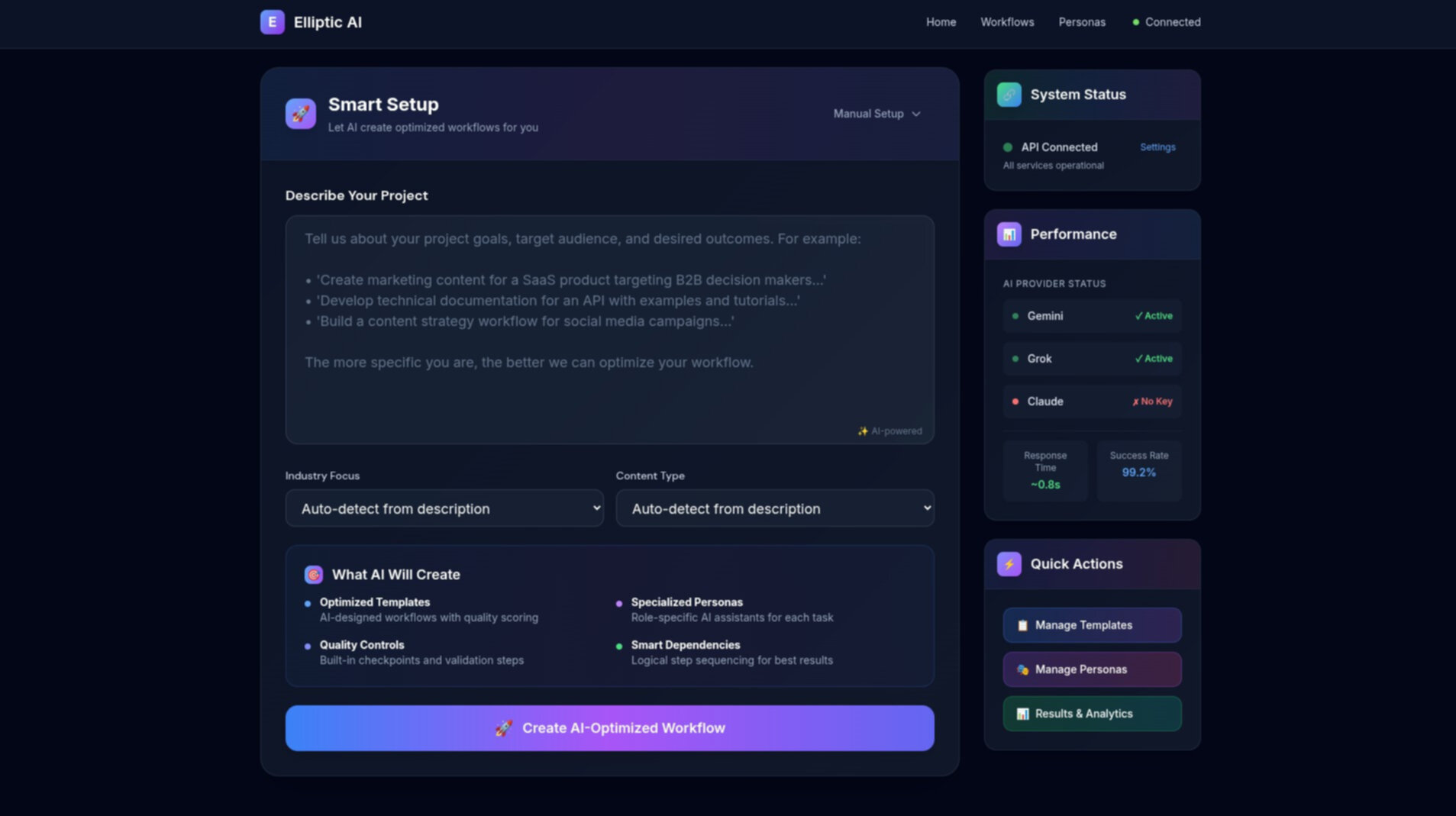
A multi-provider AI workspace designed to make complex work faster to direct, easier to review, and more resilient when a model or request fails.
The product problem
When tasks move between tools and models, people lose the context behind a request, wait without useful feedback, and have little confidence in what to do when a provider fails. The opportunity was not just faster output; it was a workflow people could understand and trust.
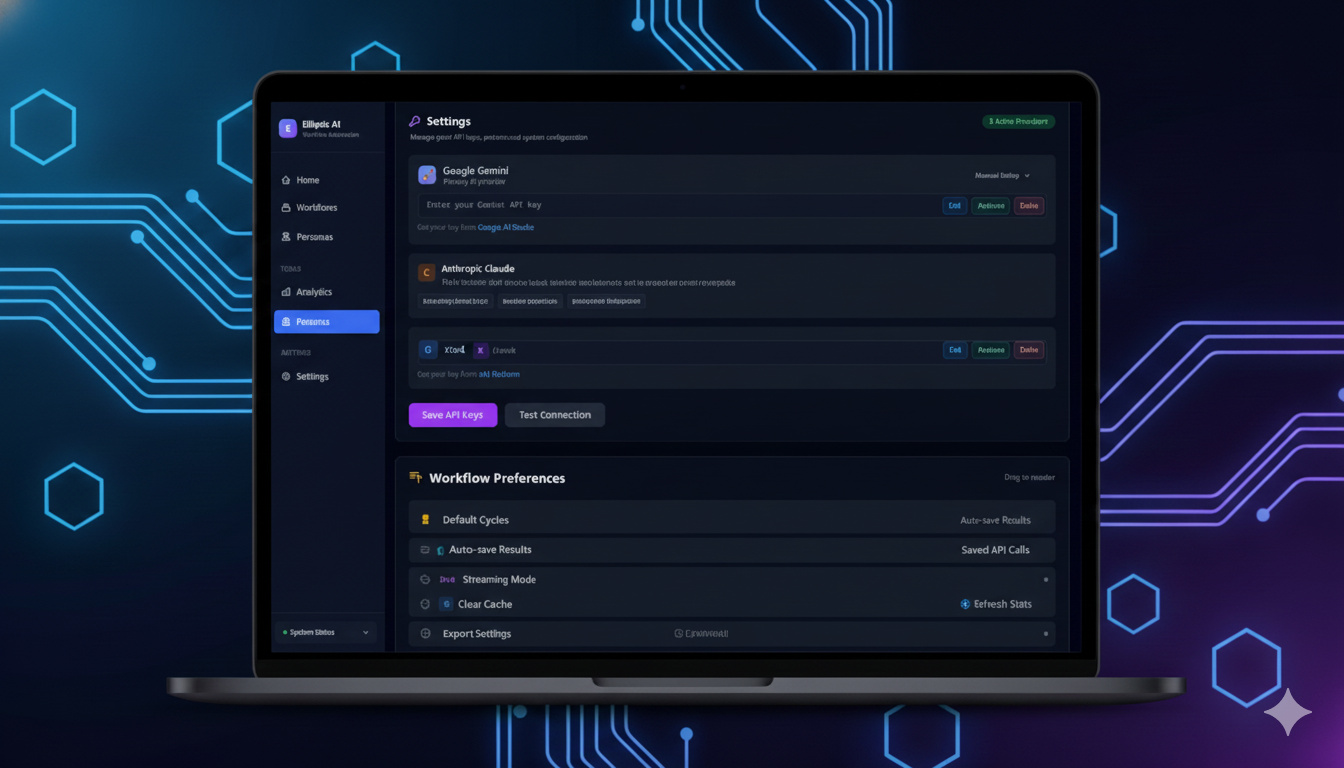
Elliptic AI brought the task, its supporting context, and the system behavior into one product surface—so direction and verification could stay close to the work.
The approach
Pair inputs, source material, and a clear brief so the system has enough information to make a useful first pass.
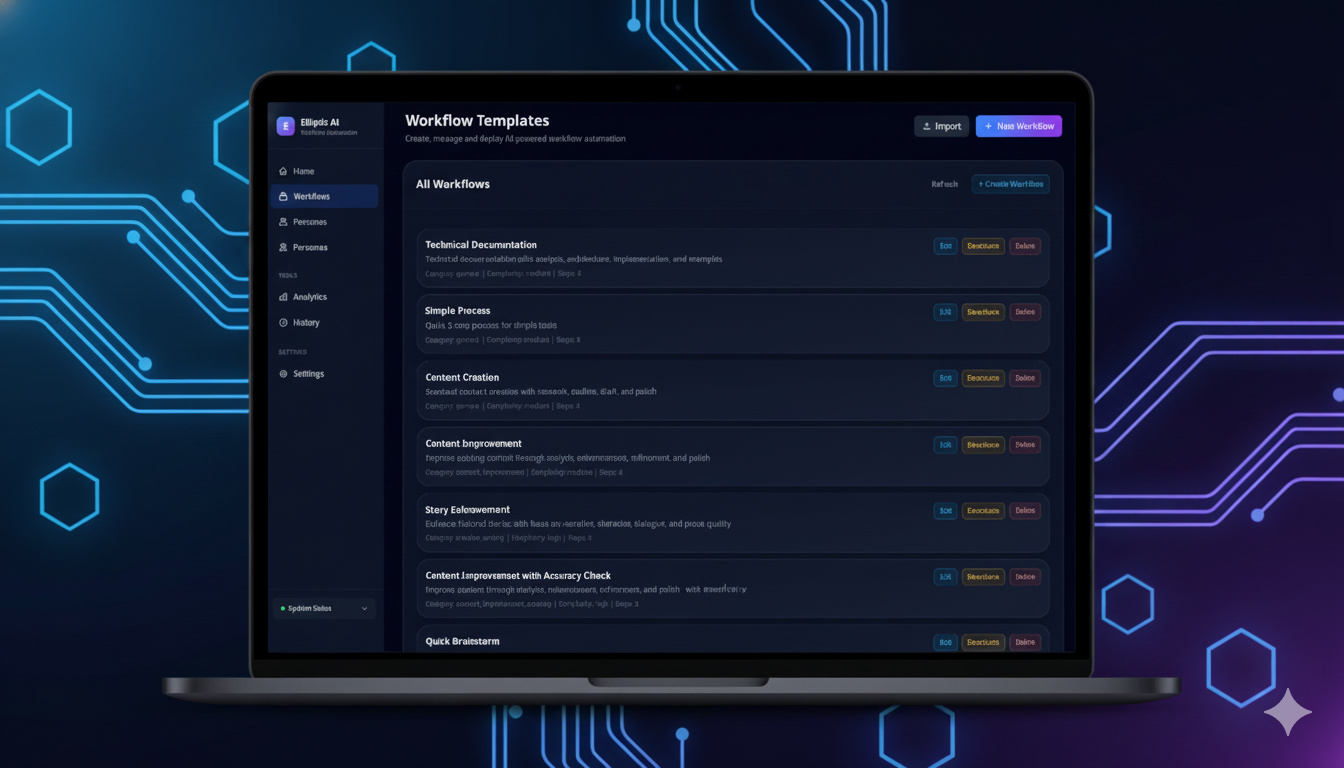
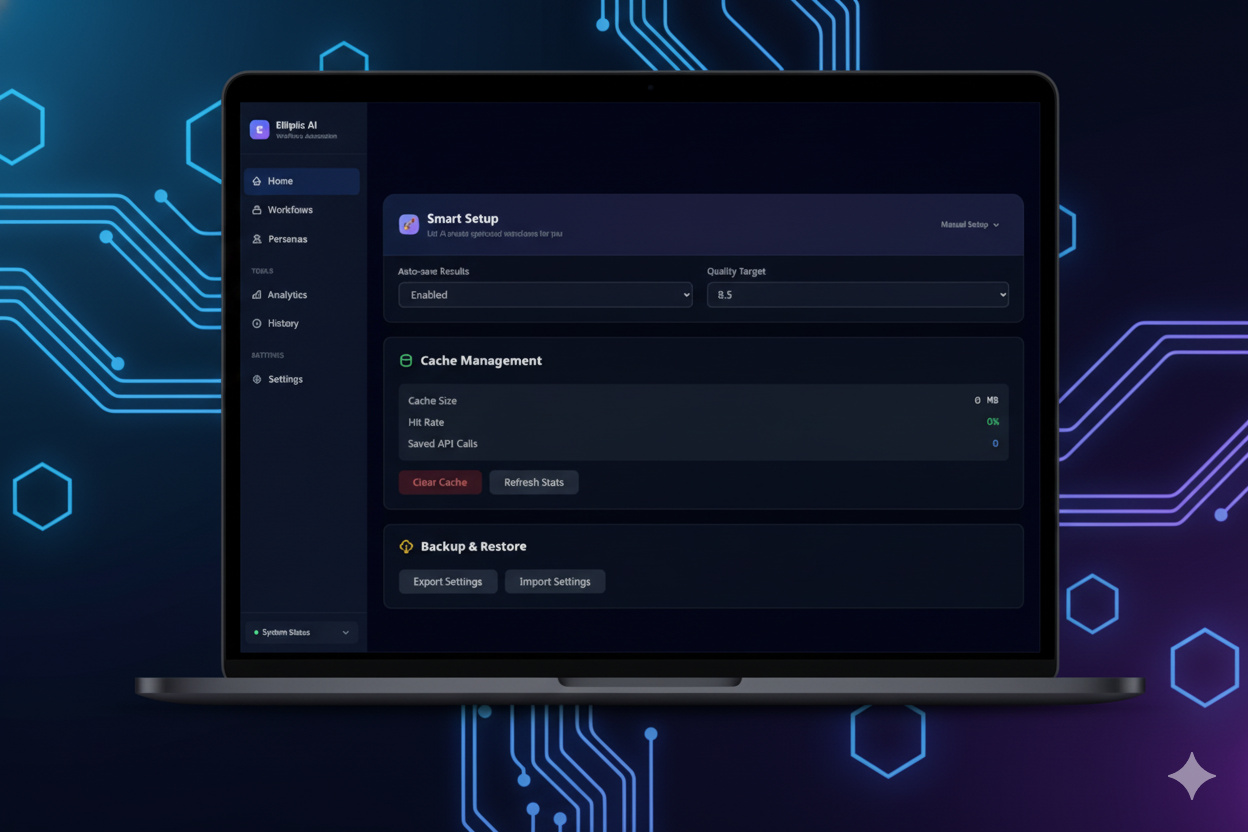
Use provider-aware routing, fallbacks, and caching to reduce avoidable friction without hiding system behavior.
Stream responses and expose status so people can review, intervene, or change course instead of waiting on a black box.
In the product
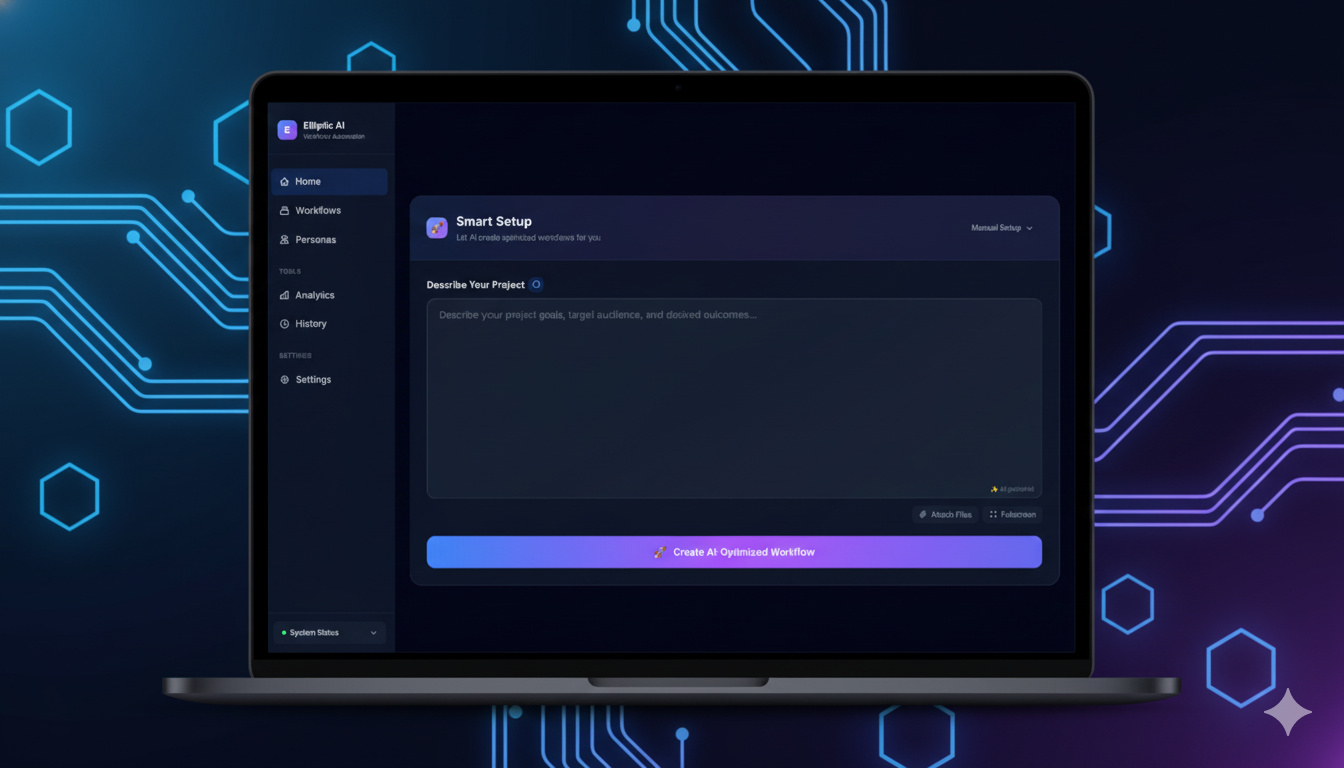
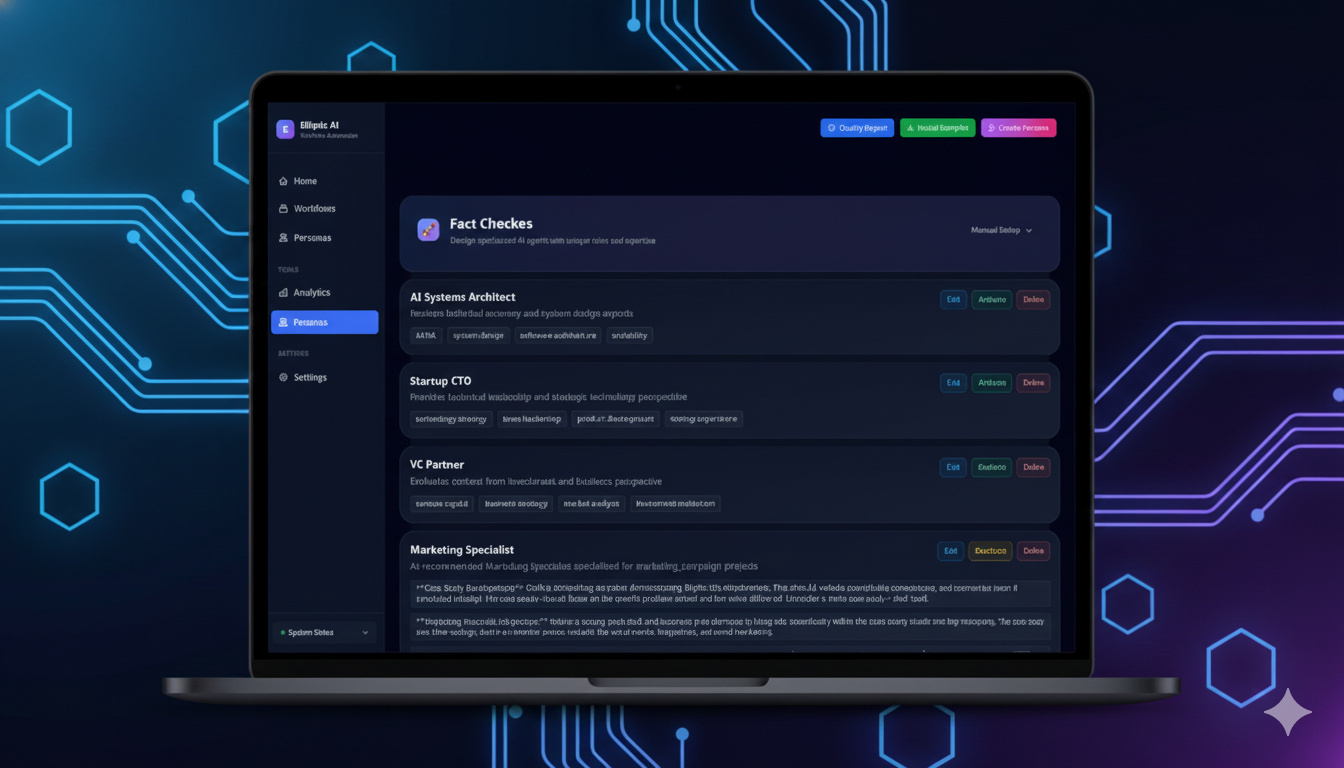
The UI keeps the active task, relevant options, and generated output in one reviewable flow—rather than sending the work through disconnected tools.
Designed capability
Prompts, supporting material, and task constraints live together, making each session easier to direct.
Provider-aware execution reduces the chance that one unavailable service stops useful work entirely.
Visible progress and output states give people a chance to check quality before treating a response as finished.
Key learning
A multi-model architecture matters only when its complexity turns into confidence for the person using it. The design work was as much about preserving context, feedback, and control as it was about the underlying orchestration.
Next case study: Upstock
Securing the Digital Asset Ecosystem
Financial institutions and law enforcement agencies lacked sophisticated tools to investigate cryptocurrency transactions and ensure compliance with anti-money laundering (AML) regulations. The complex nature of blockchain networks and the pseudonymous nature of transactions made it difficult to trace illicit activities and maintain regulatory compliance in the rapidly evolving digital asset landscape.
We developed a comprehensive blockchain analytics platform that provides real-time transaction monitoring, advanced investigation tools, and automated compliance reporting. The platform combines machine learning algorithms with blockchain analysis to identify suspicious patterns, trace transaction flows, and provide actionable intelligence for financial crime investigations.
The platform became the industry standard for blockchain analytics, enabling over $2B in cryptocurrency investigations, serving 100+ enterprise clients globally, and maintaining 99.9% uptime for mission-critical compliance operations. The solution helped financial institutions safely enter the digital asset space while maintaining regulatory compliance.
Measurable Impact on Financial Crime Prevention
Lessons from Building Enterprise Blockchain Analytics
Enterprise clients in financial services require the highest levels of security and compliance from the beginning. Building these capabilities as foundational elements rather than add-ons was essential for gaining enterprise trust and market adoption.
Success in blockchain analytics required deep understanding of both technical blockchain concepts and financial crime investigation workflows. Collaborating with domain experts throughout the development process was crucial for building truly useful tools.
Processing millions of blockchain transactions in real-time while maintaining sub-second response times required careful architectural planning and continuous optimization. Performance was not just a feature—it was a core business requirement.
Long enterprise sales cycles meant the product had to demonstrate exceptional reliability and capability from the first demo. Building comprehensive proof-of-concept capabilities and maintaining platform stability were essential for closing enterprise deals.