Less decision pressure
Progressive disclosure prevents unfamiliar terms, options, and reassurance from arriving all at once.
Case study · marketplace experience design
A home-cleaning marketplace designed around a simple premise: asking people to invite a new service into their home requires clarity and trust before conversion.
The product problem
Home cleaning is personal. A new marketplace has to answer practical questions—who is coming, what will happen, what information is needed, and what happens if something changes—without overwhelming someone before they have decided to book.
The experience needed to make the service legible one decision at a time, helping people build enough confidence to continue instead of compressing every concern into a single form.
The approach
Give people a clear model of what they are booking, what is included, and why the service is useful before requesting details.
Use progressive steps to reduce cognitive load and make each request for information feel relevant to what comes next.
Place expectations, safeguards, and support where people are most likely to question whether the experience is right for them.
In the product
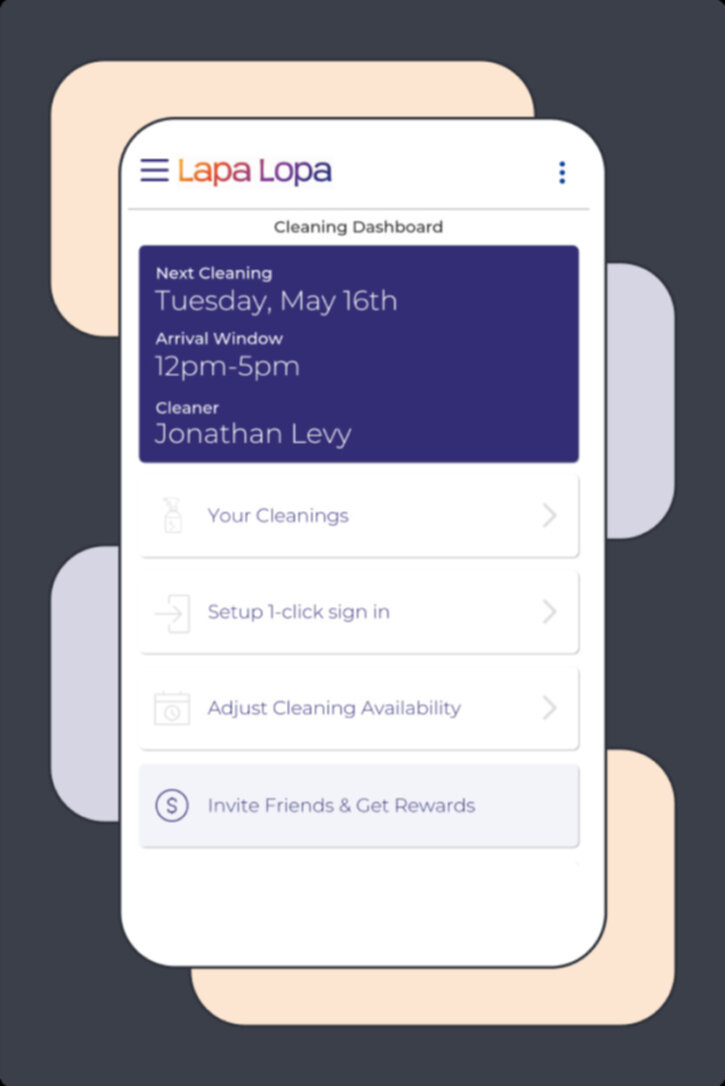
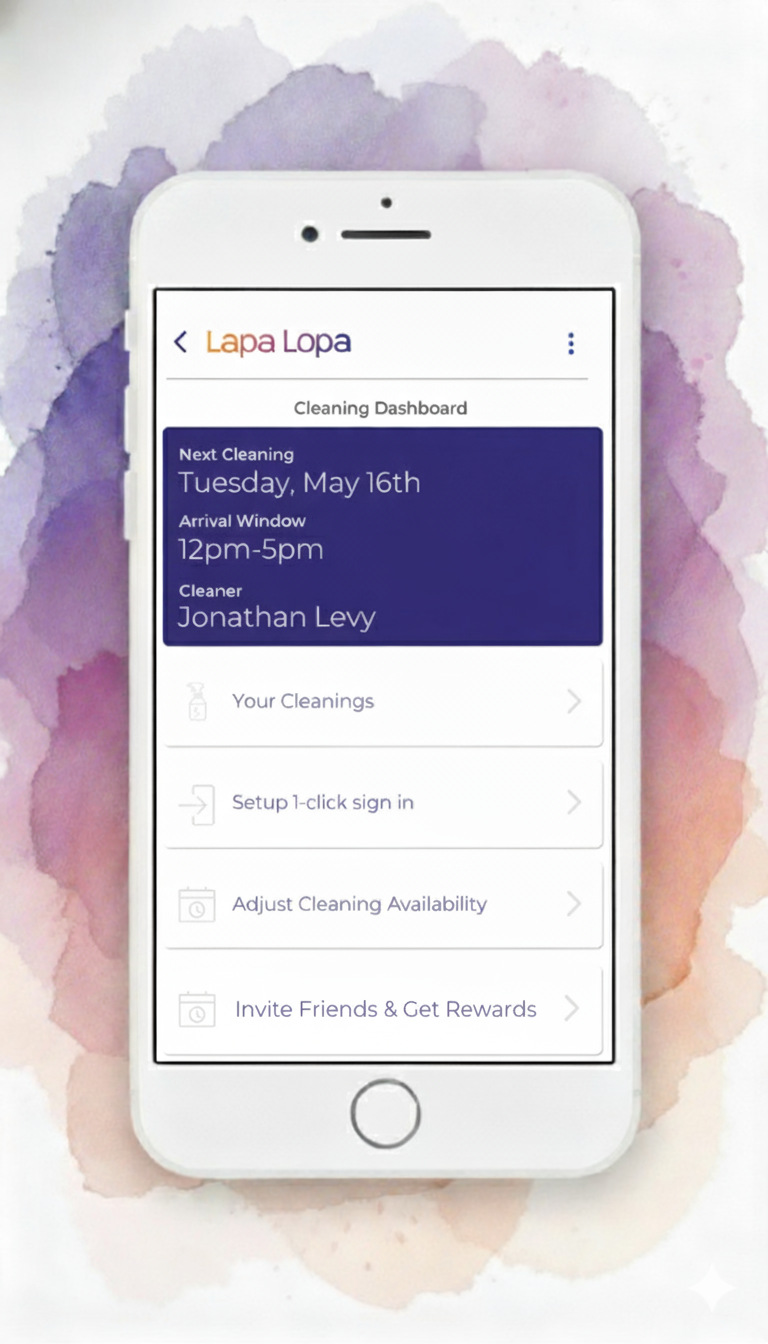
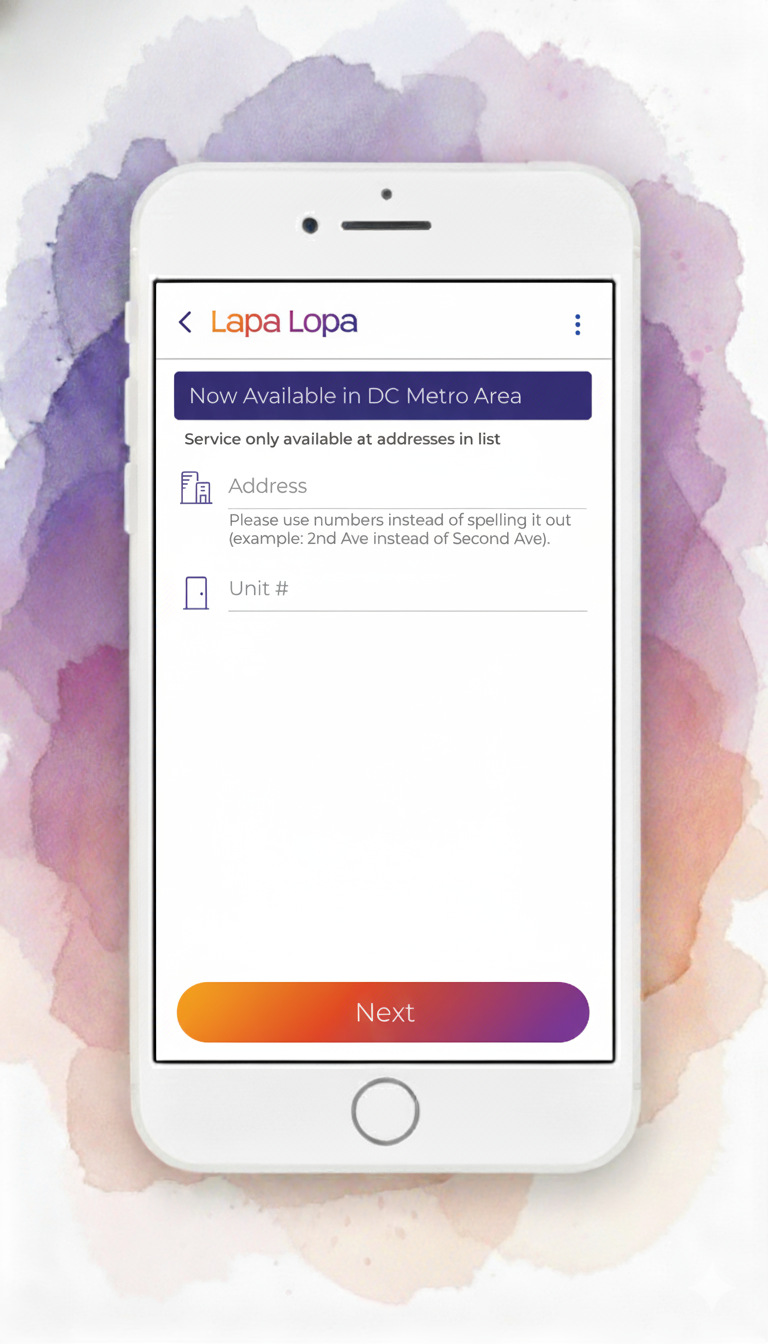
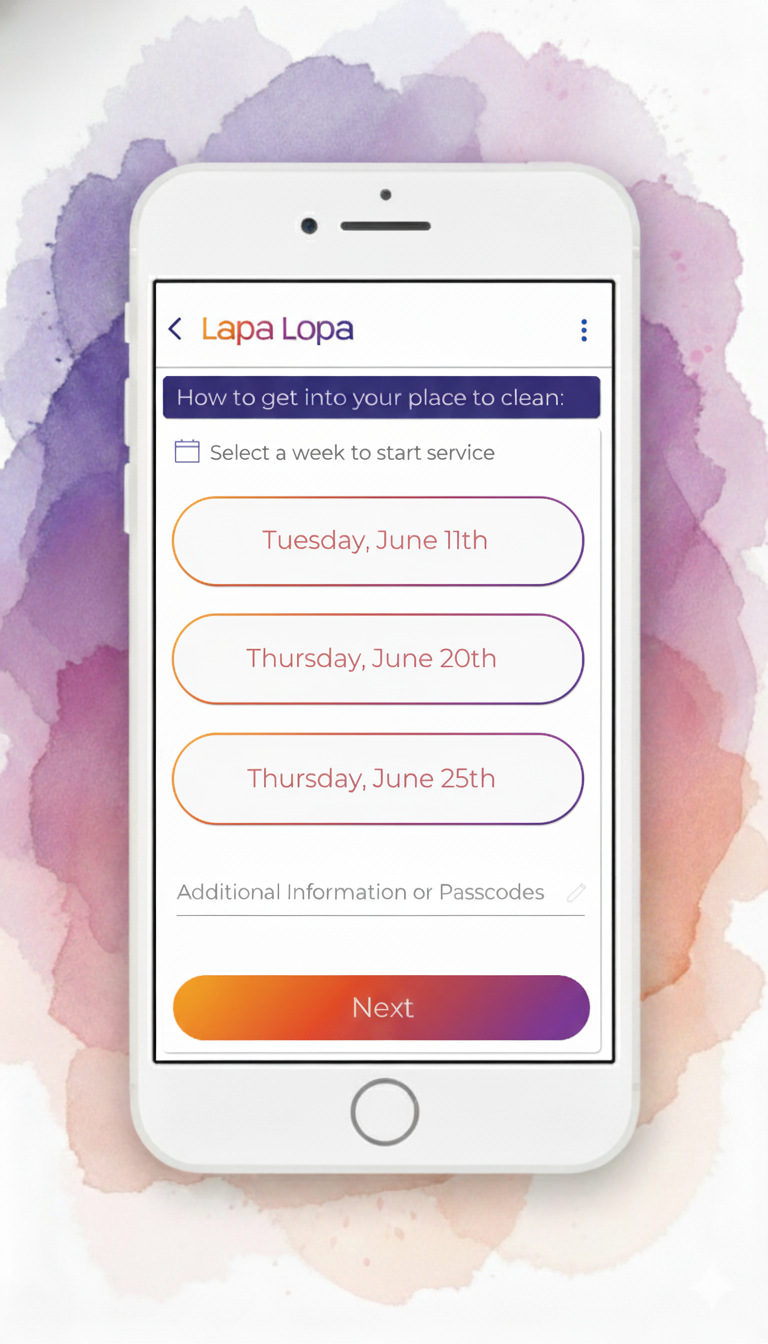
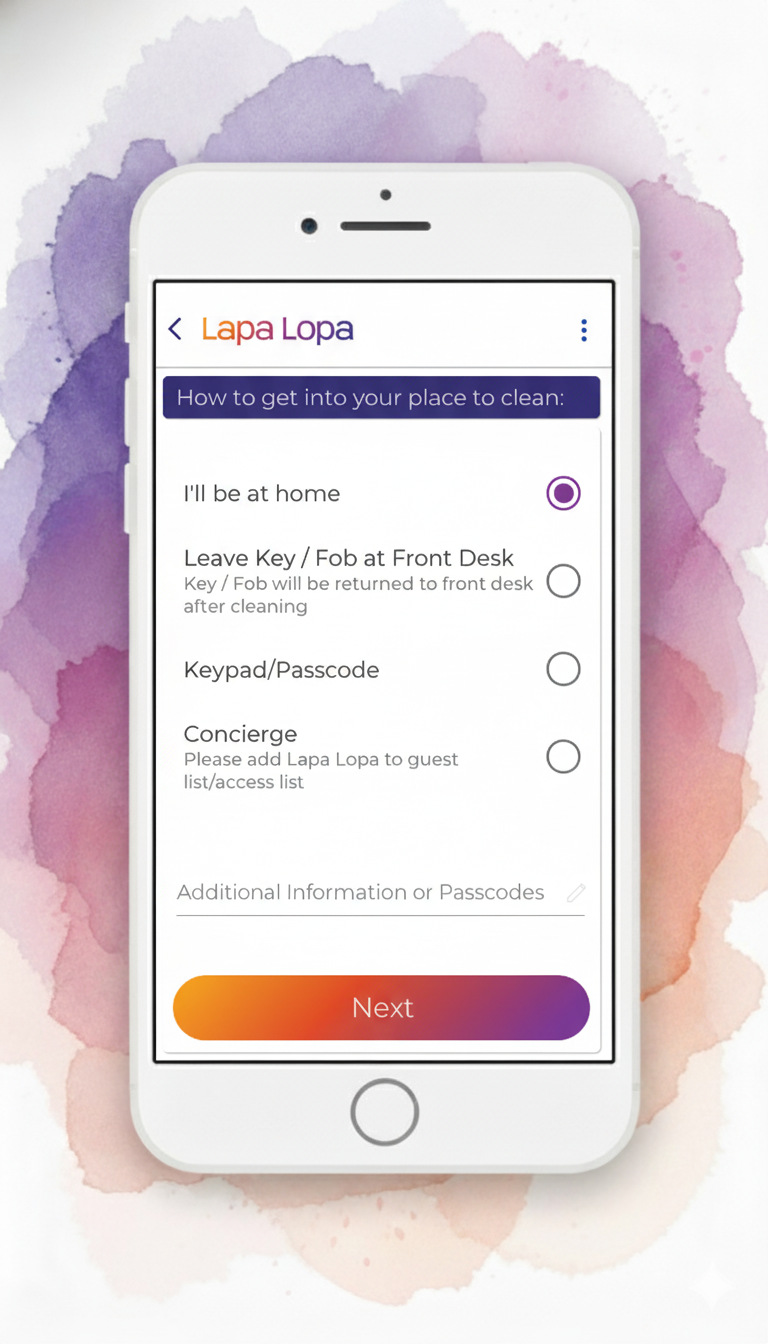
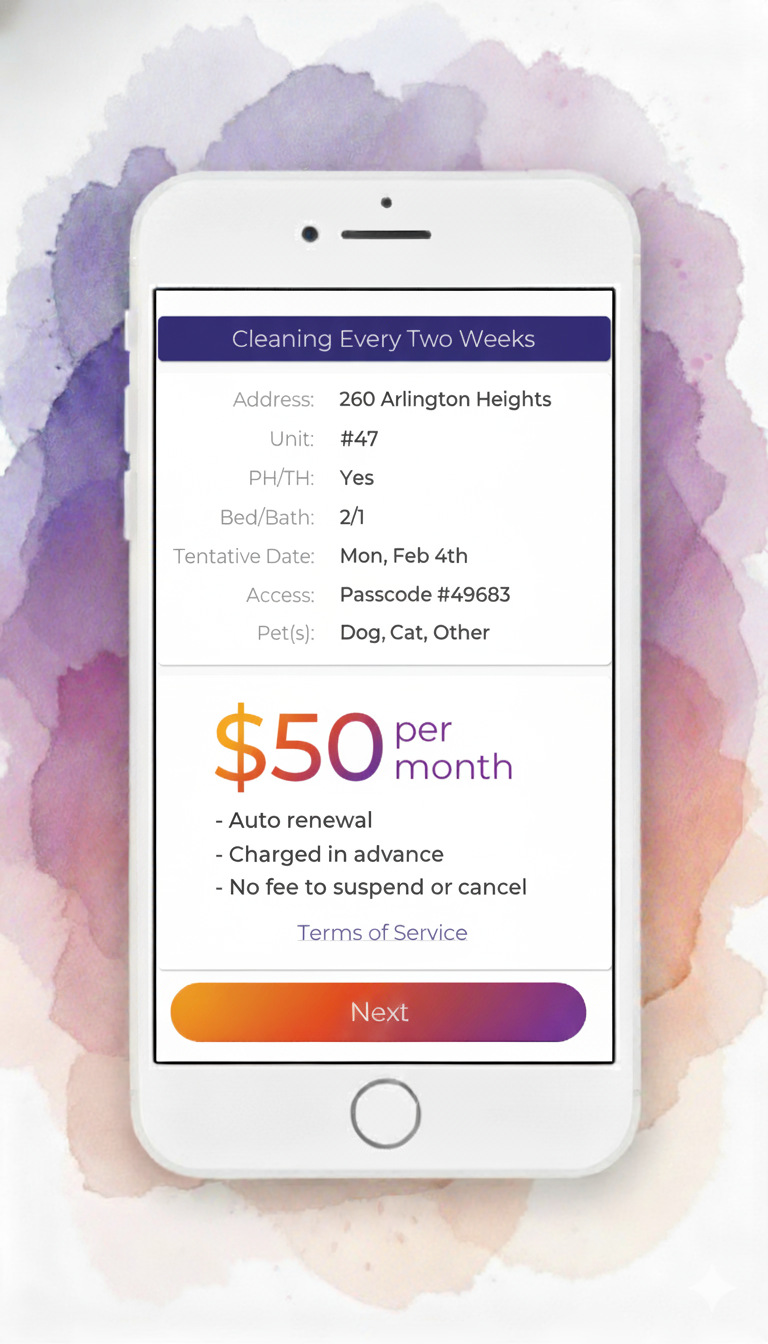
The product organizes unfamiliar decisions into a step-by-step experience so people can see where they are, what is needed, and what will happen after they continue.
Designed capability
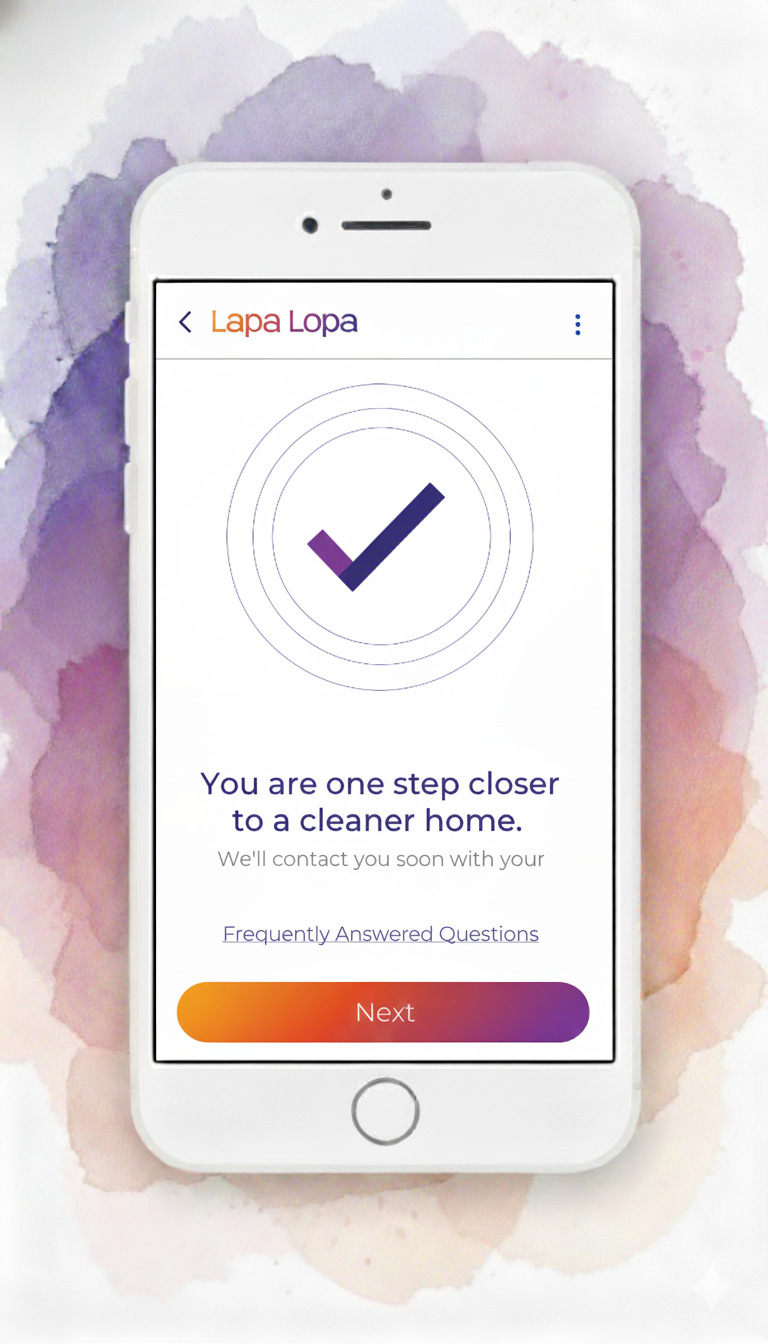
Progressive disclosure prevents unfamiliar terms, options, and reassurance from arriving all at once.
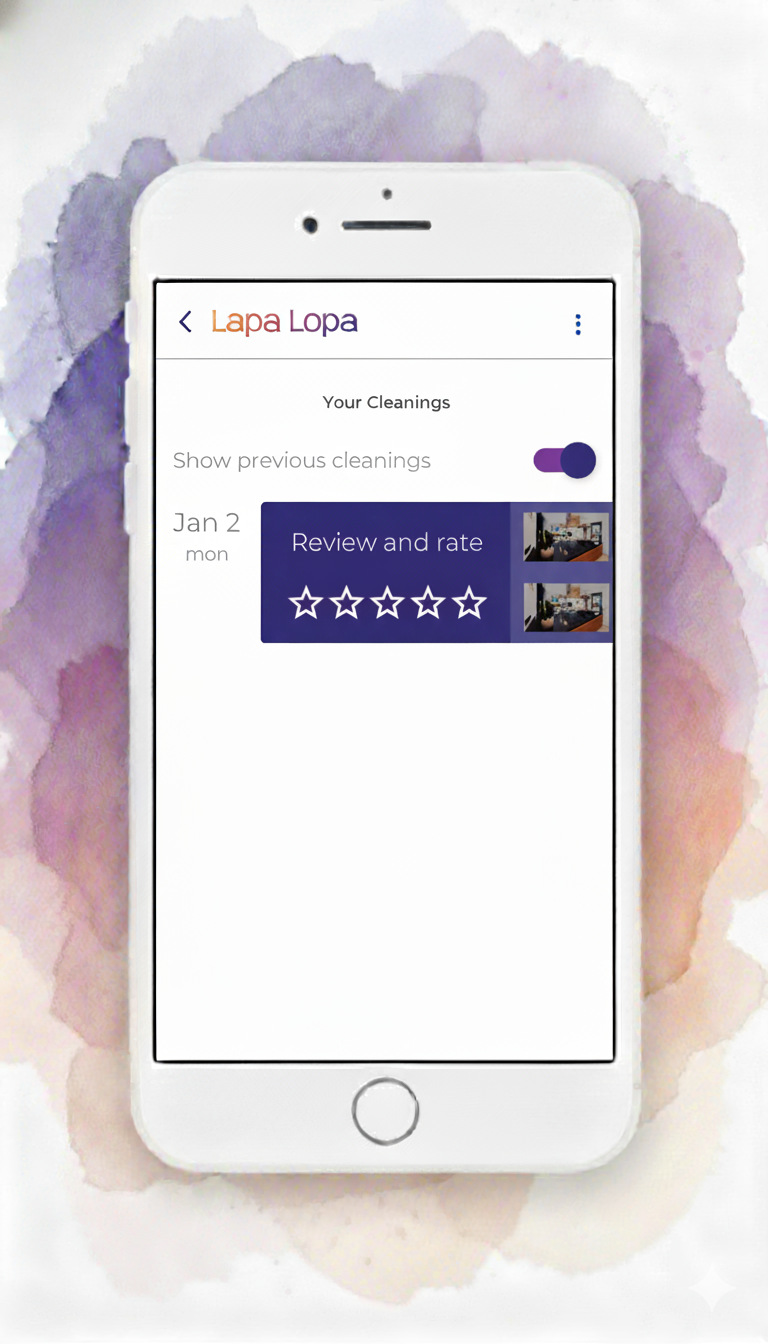
The experience makes what is being booked, what happens next, and where support exists easier to understand.
Onboarding, language, and states work together to make a sensitive service feel considered rather than transactional.
Key learning
For unfamiliar services, the UX cannot treat every visitor as ready to act. It has to teach just enough, at the right moments, while giving people a clear sense of control over the decision.
Back to all projectsCreating a New Market Through Strategic UX
How do you convince urban dwellers to let strangers into their homes? How do you explain a service that's never existed before? We faced three critical barriers: cognitive overload from unfamiliar service complexity, trust concerns about home access, and conversion friction from cramming too much into a single decision moment. Our diverse city demographics ranged from tech-savvy millennials to older residents who'd never used an app-based service. None of them had a mental model for 'cleaning-as-a-subscription.'
We built trust sequentially, not demanding it immediately. Through systematic research—analyzing cognitive load theory, studying 15+ user interviews, and examining cross-industry onboarding patterns—we designed a 4-step progressive disclosure flow. Each step focused on a single objective while building toward the ultimate goal. Users could see progress clearly, understand why information was needed, and feel confident about the next action. The key insight: novel services require significantly more hand-holding than familiar ones.
We achieved a 73% conversion rate from onboarding start to payment completion—more than doubling industry benchmarks of 15-30%. This translated to 1000+ paying customers in twelve months with customer acquisition cost under $45 per user and lifetime value exceeding $300. Our 82% month-2 retention rate beat the 65% industry average, and support tickets related to onboarding confusion stayed under 5%. The design proved that strategic UX can create entirely new markets when applied systematically.
Measurable Impact on Market Creation
Lessons from Creating a New Market Category
Multi-step forms convert 86% higher than single-page alternatives because they respect human working memory limitations (3-5 information chunks). For novel services requiring user education, progressive disclosure isn't just good UX—it's essential business strategy. Our systematic application of cognitive load theory directly translated to measurable conversion improvements.
Users encountering unfamiliar service categories exhibit measurable anxiety-reducing behaviors. They slow down, seek additional information, and rely heavily on external validation before committing. Designing trust-building progression from low-commitment entry to high-commitment conversion—rather than demanding trust immediately—proved essential for our 73% conversion rate.
Cross-industry analysis, cognitive psychology foundation, and systematic user research provided confidence during development and proved crucial for adoption. Our research-driven approach—studying Netflix's onboarding, financial services trust patterns, and conducting 15+ user interviews—created a replicable framework that scaled beyond the initial product.
The broader implication extends beyond onboarding optimization. When markets shift rapidly and new service categories emerge constantly, companies that understand user psychology principles gain sustainable advantage. Our methodology proved that strategic UX design can create new markets, not just optimize existing ones, when applied systematically with proper research foundation.